nbspike: Integrative Epitope Mapping of SARS-CoV-2 Nanobodies
2021Sali lab, UCSF
Docking score for nanobody–SARS-CoV-2 Spike interactions using chemical crosslinkS and escape mutation data. Discovered vulnerable and resilient epitopes across variants of concern.
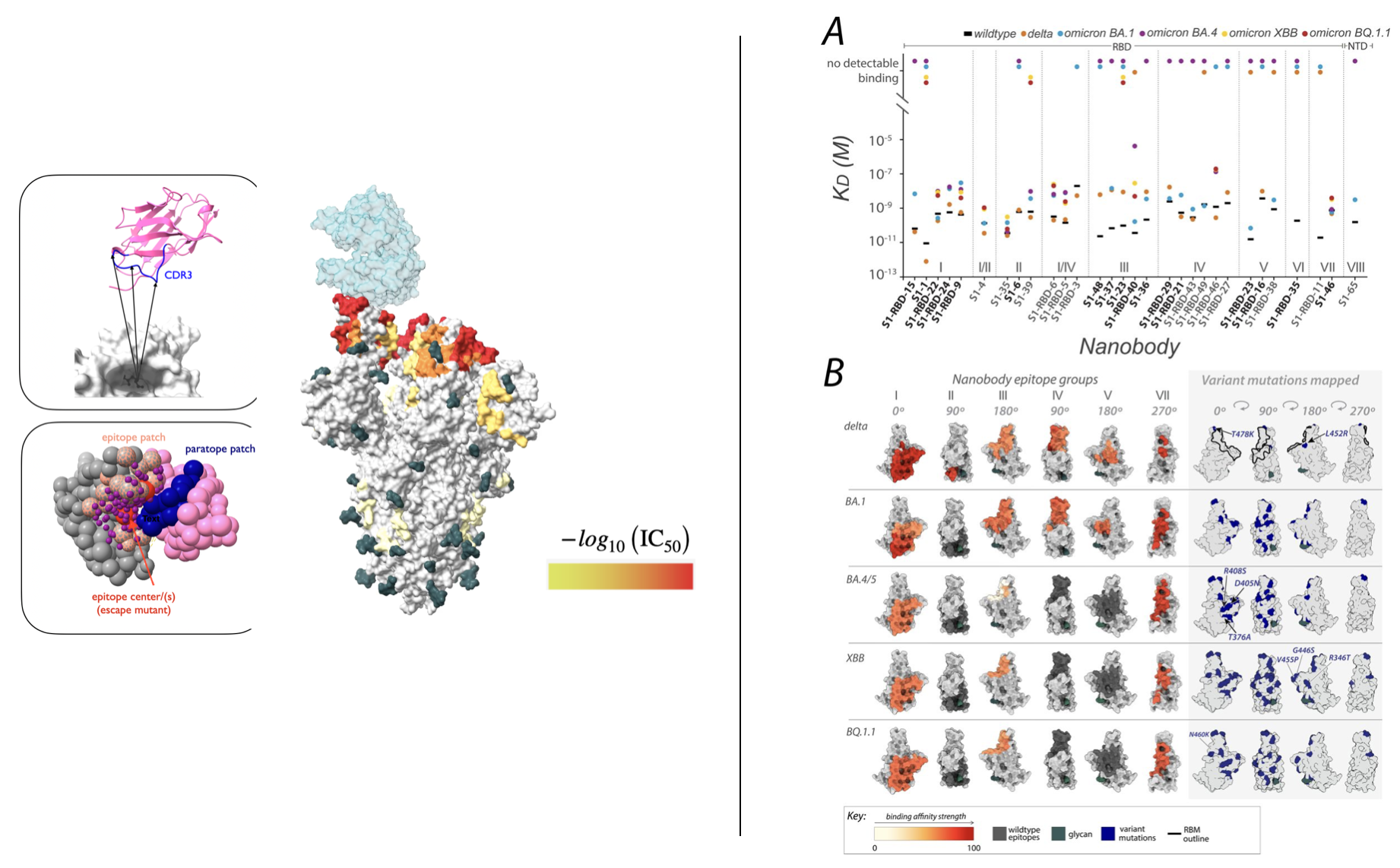
Developed integrative protein–protein docking score to characterize the epitopes of nanobodies on the Receptor Binding Domain (RBD) of the SARS-CoV-2 spike protein. This was part of a diverse study of nanobodies as drug candidates against COVID-19, in collaboration with labs within the National Center for Dynamic Interactome Research (NCDIR).
Unlike traditional docking methods in PatchDock or Rosetta, this study unified chemical crosslinking and escape mutation data to pinpoint nanobody binding modes on the RBD. We built integrative rigid-body docking restraints within IMP that predict coarse-grained nanobody binding modes and epitope shapes while reporting prediction uncertainties.
The structural models helped validate pairwise synergy between nanobodies on the RBD and stratified a repertoire of 20+ nanobodies into groups by their most probable target areas on the RBD surface.
Subsequently, we extended the epitope characterization to variants of concern and painted a vulnerability landscape of Spike RBD regions to nanobody therapies.
- First paper - Anti-SARS-CoV-2 nanobody repertoire published in eLife
- Second paper - Extended characterization of variants of concern published in eLife
- Modeling scripts available at nbspike